Design for Sexual Health Among Women
Female sexuality has long been shaped by shame, silence, and misinformation. This project explores how design can challenge those norms and support improved sexual health and gender equality for women.
Focus of the Concept
The project proposes a multi-layered design solution that addresses both:
- Educational gaps around female sexuality and self-pleasure
- Behavioural barriers such as shame, invisibility, and lack of shared language
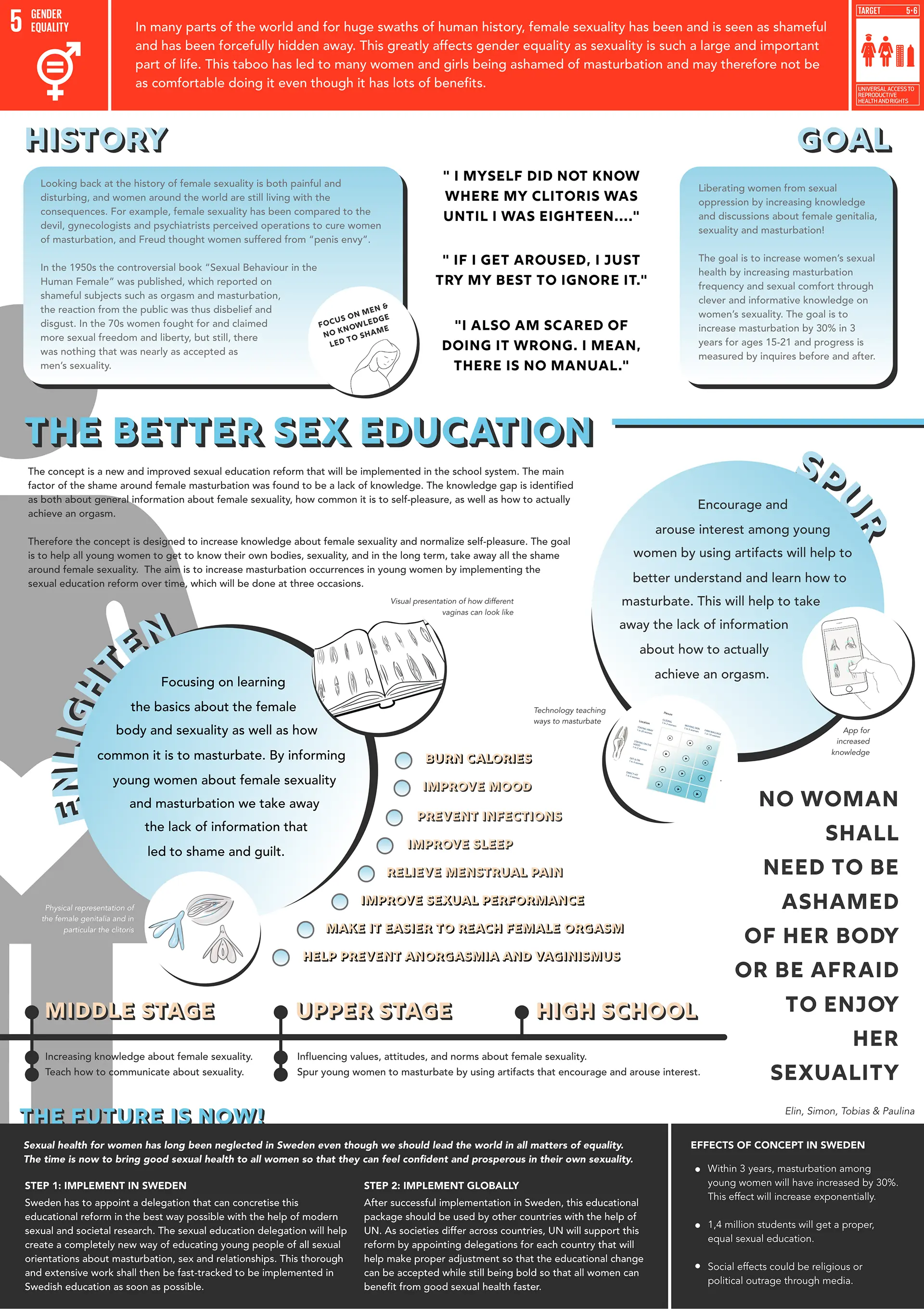
Rather than a single product or campaign, the outcome is a system-level proposal combining sexual education reform with the use of conceptual artefacts to support long-term behavioural change. The solution is presented through an informational poster and a supporting product concept.
Ovewview of the approach & methods
1. Design Approach
The project was guided by a human-centred and behaviour-driven design approach, with a strong focus on long-term cultural and behavioural change rather than short-term interventions.
Two main design frameworks structured the work:
- Activity-Oriented Design
Used to analyze everyday behaviors, social norms, and environmental factors influencing female self-pleasure. This approach helped identify mismatches between women’s needs, existing products, education, and societal expectations. - Design for Sustainable Behaviour (DfSB)
Applied throughout the project as both an approach and a method, from early research to concept development. DfSB was used to explore how design can encourage more open, sustainable behaviors around sexual health by reducing shame, increasing visibility, and supporting normalization over time.
Together, these frameworks ensured that behavioral impact — not aesthetics or product form — remained the core driver of the project.
2. Research Methods
To ground the work in real experiences, the project combined qualitative and quantitative research methods:
- Interviews
Conducted to understand personal experiences, attitudes, and challenges related to female sexuality, masturbation, and sexual education. These insights highlighted emotional barriers such as shame, uncertainty, and lack of guidance. - Surveys
Used to identify broader patterns in knowledge gaps, comfort levels, and language use around female self-pleasure. Survey results helped validate themes identified in interviews. - Literature and Data Research
Included research on sexual health, gender equality, sexual education in Sweden, and historical perspectives on female sexuality. This provided context and supported the need for systemic change.
Insights from these methods were synthesized into behavioral patterns and mismatches, which informed both the educational proposal and the conceptual artifact.
Final Concept
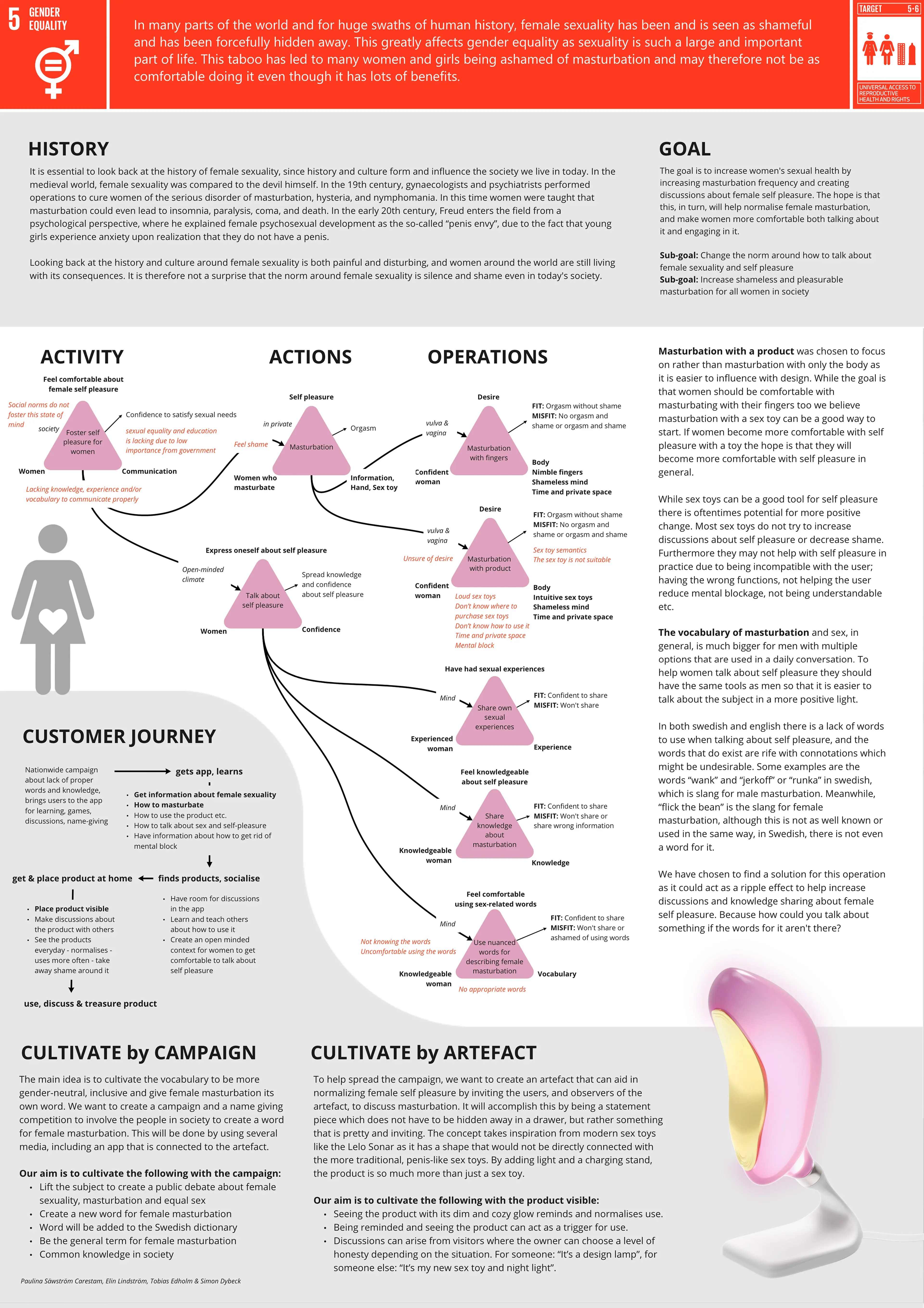
The artifact concept:
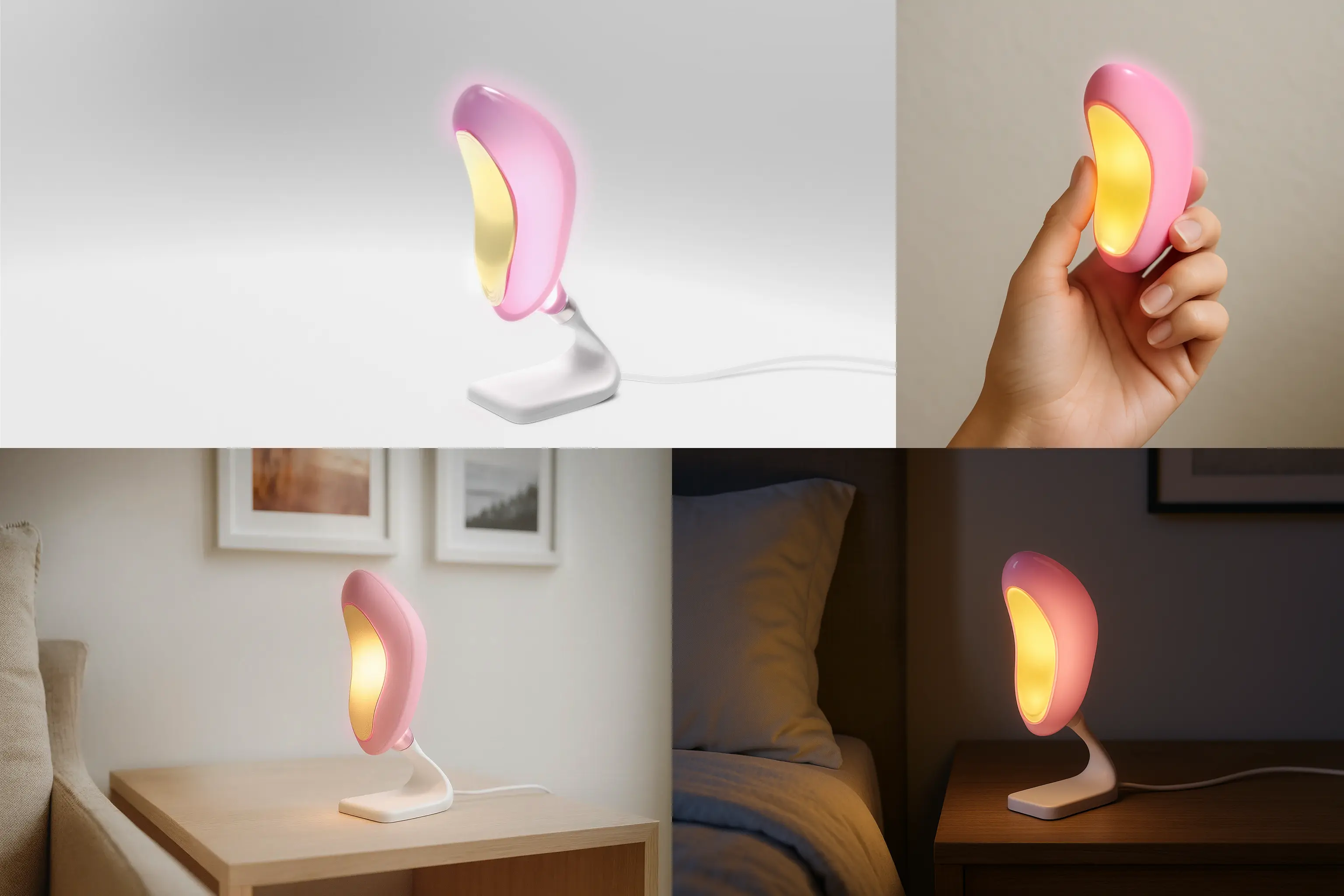
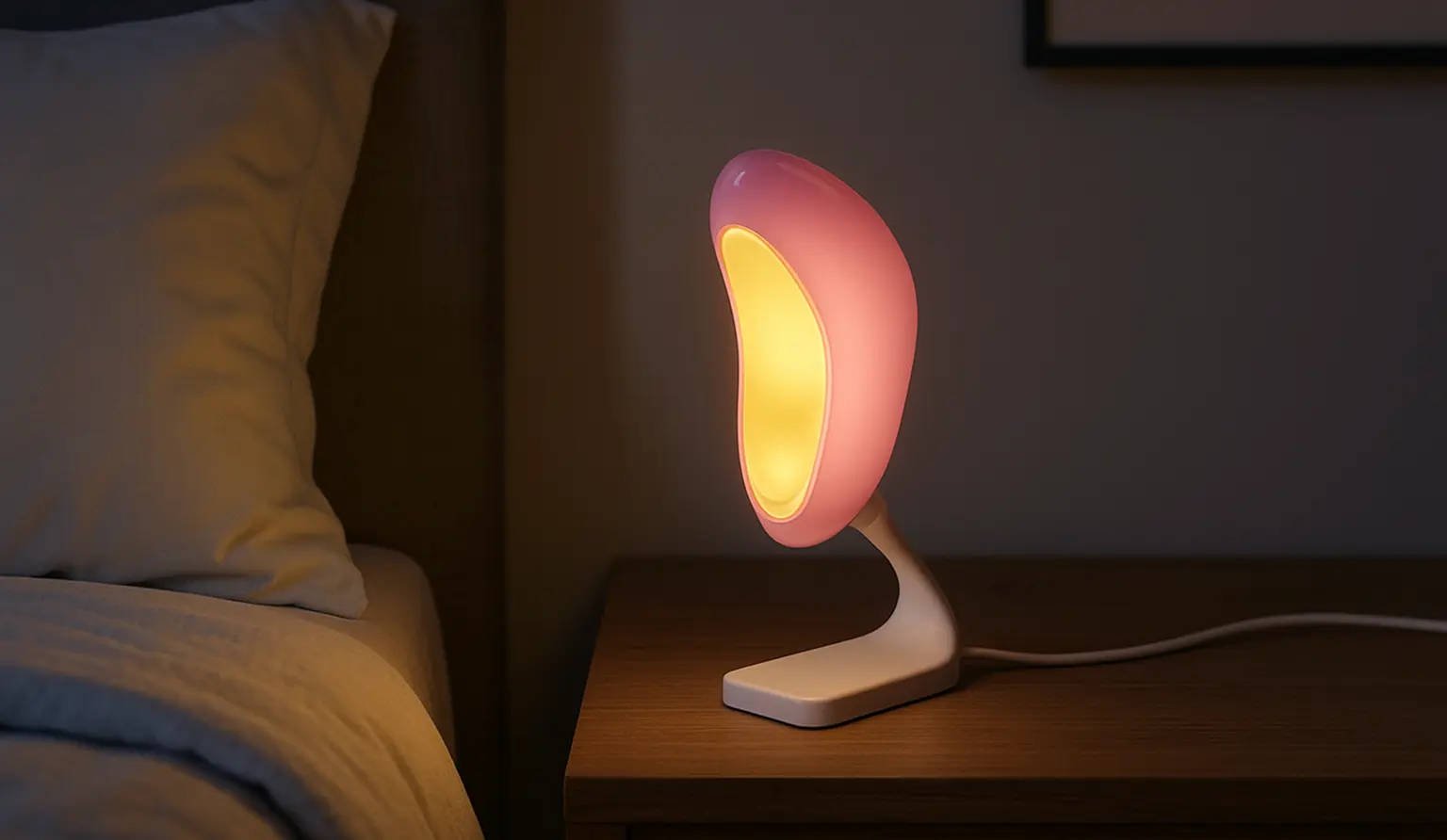
The focus of this project was not to develop a fully detailed product, but to create a conceptual artefact that communicates how such an object could look, feel, and exist in everyday life.