Clay as a sustainable building material
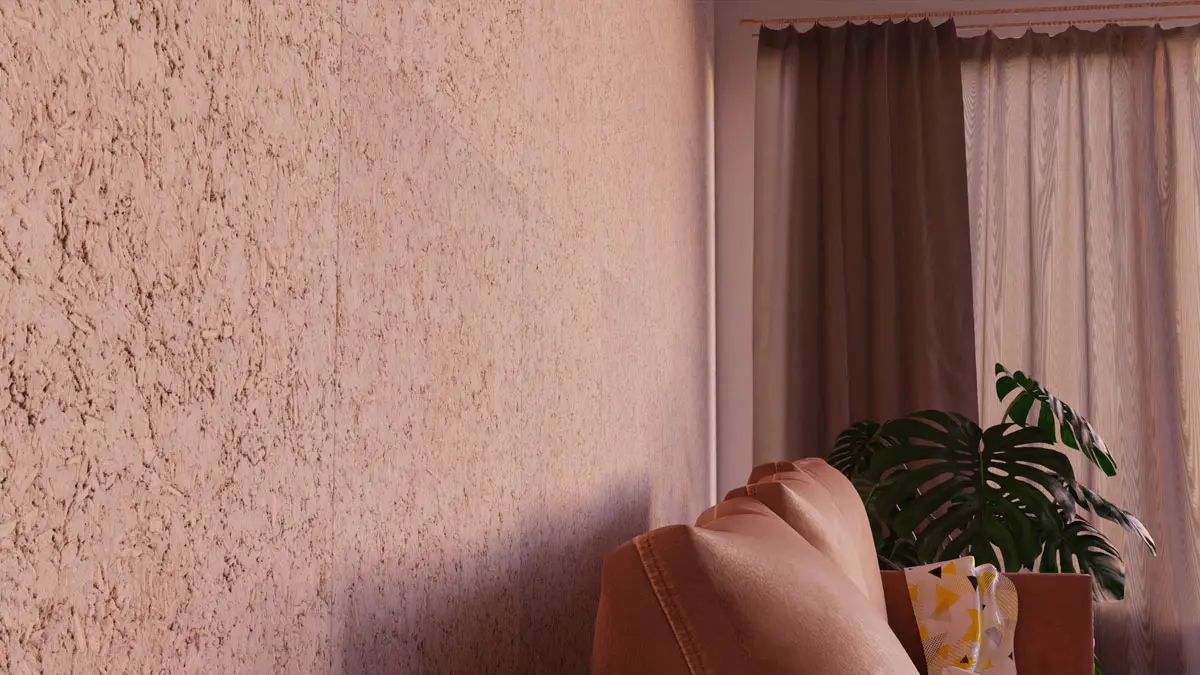
This project was carried out in collaboration with Snøhetta as part of their ongoing research into clay as a sustainable building material.
Our work focused on examining the potential of locally sourced clay and developing a concept that could replace an existing interior building element.
Showcase clay as a sustainable building material
This project will focus on using the clay from Västlänken to design a concept through material development and prototyping. This entails using and reusing the local clay with less energy-intensive processing, employing circular design principles, and adopting more sustainable ways of consuming the material within cradle-to-cradle life cycles.
The problem: Clay is treated as waste instead of a valuable local resource.
Globally:
Construction materials often require huge amounts of energy to produce and transport, creating unnecessary environmental impact and overlooking nearby, natural resources.
Locally (Gothenburg):
Despite being one of the oldest building materials, clay in the western world is commonly treated as waste. During the Västlänken project (2018–2026), 1.7 million m³ of clay will be excavated in Gothenburg and sent to landfill—simply because it’s not seen as a usable material.
Turning excavated clay into interior wall panels
Through interviews, research, and hands-on material testing, we identified interior clay panels as the most promising way to reuse Gothenburg’s excavated clay in a sustainable, scalable way.
What we created:
Interior wall panels made from locally excavated clay — a biodegradable, low-carbon alternative to standard drywall.
Key steps & outcomes:
- Developed and tested clay mixtures using local excavated clay and biodegradable binders.
- Manufactured 11 prototype panels plus one full-size panel for durability and performance testing.
- Evaluated strength, recyclability, installation methods, and aesthetic qualities.
- Designed a full interior wall concept with multiple installation solutions.
- Performed a Life Cycle Assessment (LCA) showing a 62% reduction in CO₂e/m² compared to conventional materials.
The overall approach
Our process combined design thinking with sustainable design principles — starting with research, defining requirements, and then developing and testing clay-based prototypes to evaluate performance and environmental impact.
Empathise
Benchmarking: Interior wall panels
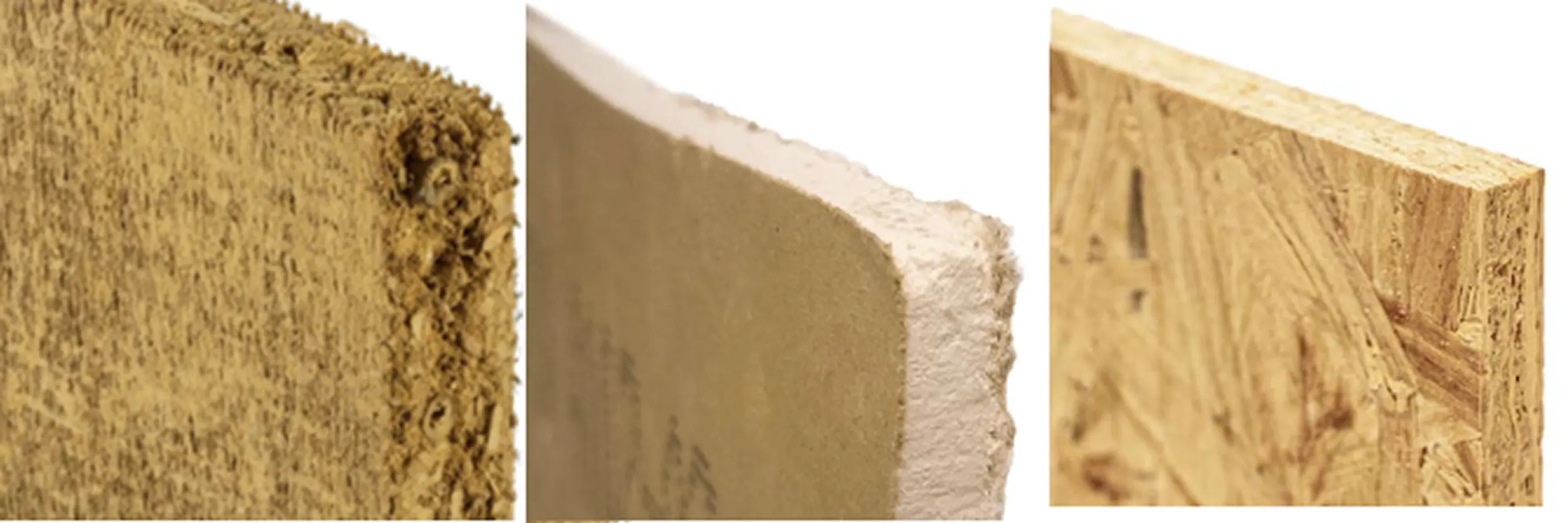
To understand the landscape of interior wall materials, we benchmarked the most common solutions: gypsum and plasterboard, OSB, and clay-based products such as Claytec.
The comparison focused on four key criteria: fire protection, weight, cost, and production methods.
User studies: What do the stakeholders want?
Interviewed users:
• 5 building professionals (installers, project leaders, material specialists)
• 5 house owners
What we learned:
• Professionals are motivated by sustainability when it aligns with efficiency, cost, and reliability.
• New materials must meet strict requirements for durability, fire safety, ease of installation, and availability.
• House owners are motivated by environmental impact, health, and creating a comfortable home.
• They want sustainable materials that are affordable, easy to maintain, and visually appealing.
• Both groups are open to new solutions if the material clearly performs as well as, or better than, conventional options.
• Many house owners expressed interest in additional features — such as improved indoor climate or sound absorption — if allowed to “think outside the box.”
Define
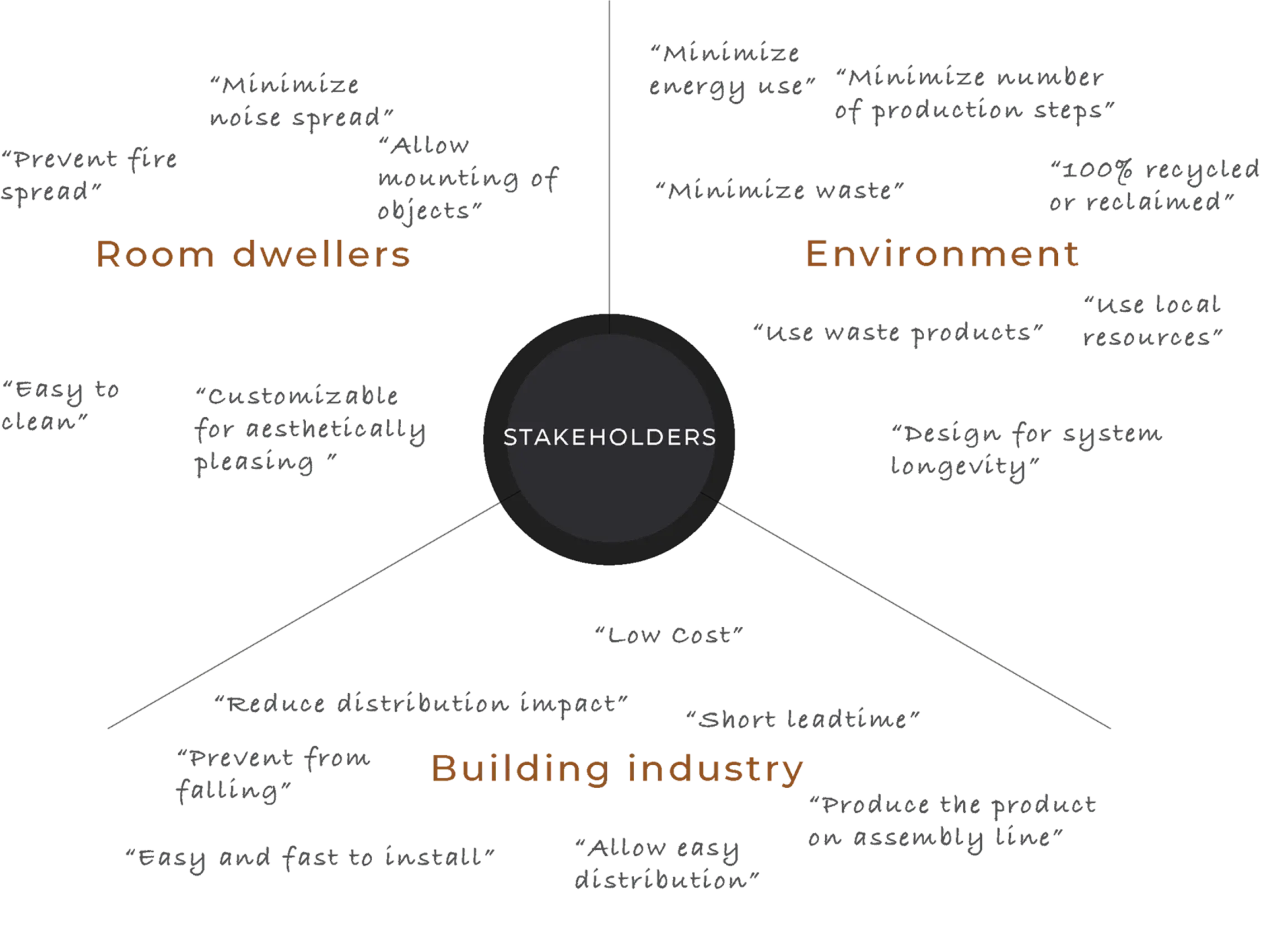
Mind map: The environment is a key stakeholder
Insights from the research were synthesised into a mind map organised by stakeholder type. The project serves manufacturers, installers, project leaders, house owners, and the people who will eventually occupy the spaces built with the product.
Sustainability emerged as a central priority, positioning the environment itself as a key stakeholder throughout the material’s life cycle.
Requirement specification
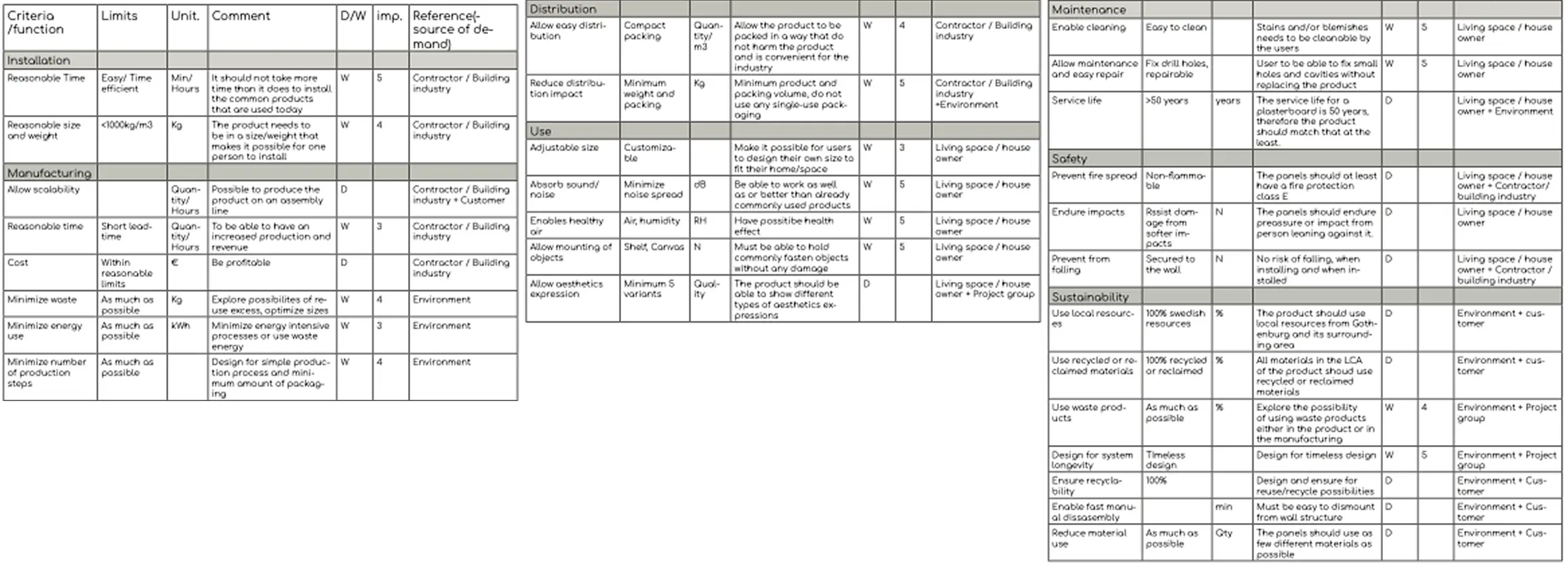
Based on personas, interviews, expert input, and research, we defined the final requirements for the concept.
Money and time were identified as the most influential criteria for the building industry. Users’ needs and wishes were incorporated, alongside the performance requirements of commonly used interior wall products. Environmental expectations were structured using the eco-design strategy wheel.
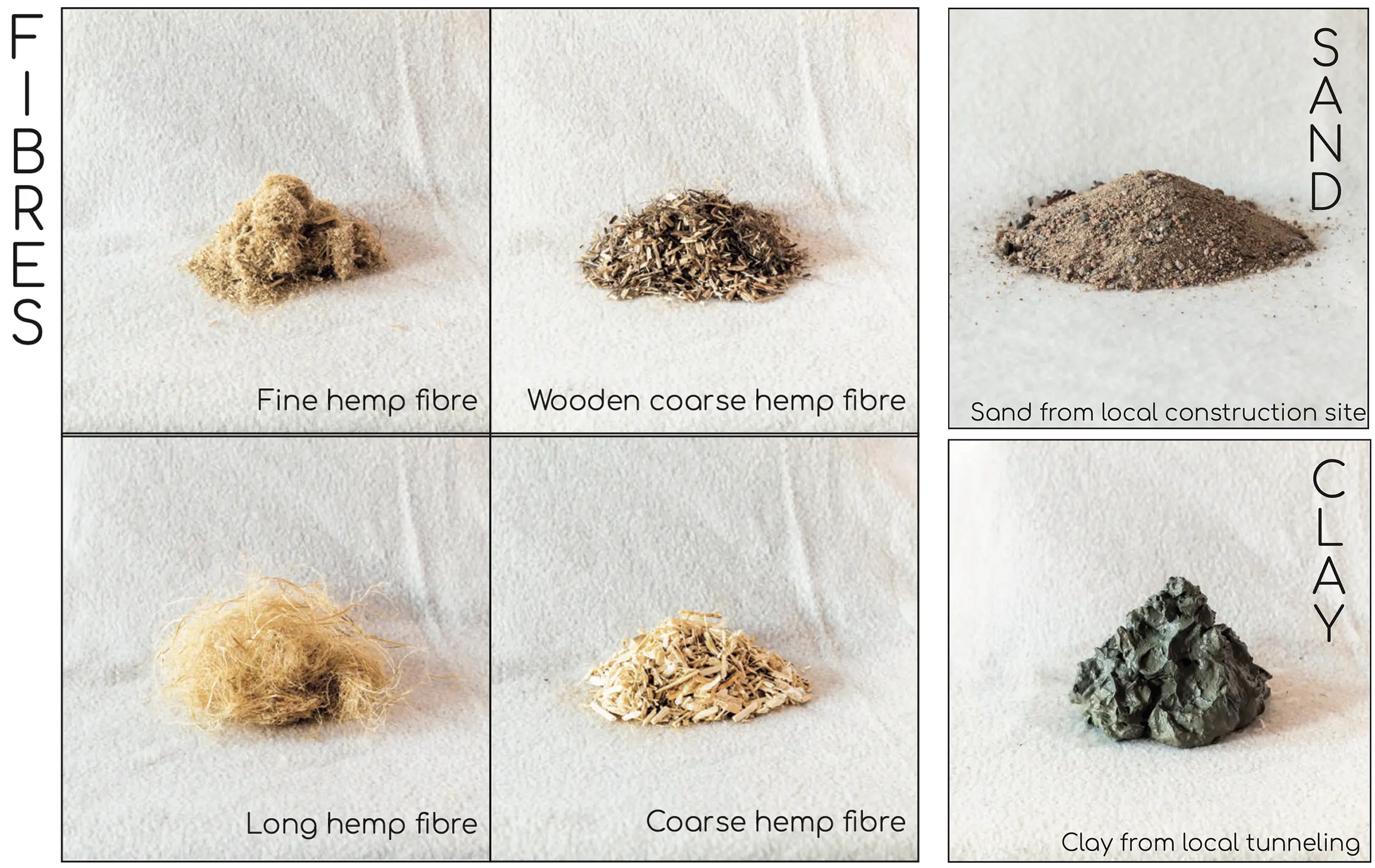
Material: Clay, Sand and Hemp fiber
Why these materials:
• Expert insights showed that clay alone was not enough to create durable interior panels.
• A brainstorming session identified three viable natural materials: clay, sand, and hemp fiber.
Material sourcing:
• All raw materials were collected locally — between 7 and 100 km away — by bike or car.
• Transportation impact was accounted for in the Life Cycle Assessment (LCA).
• Molds and prototyping tools were built from recycled materials.
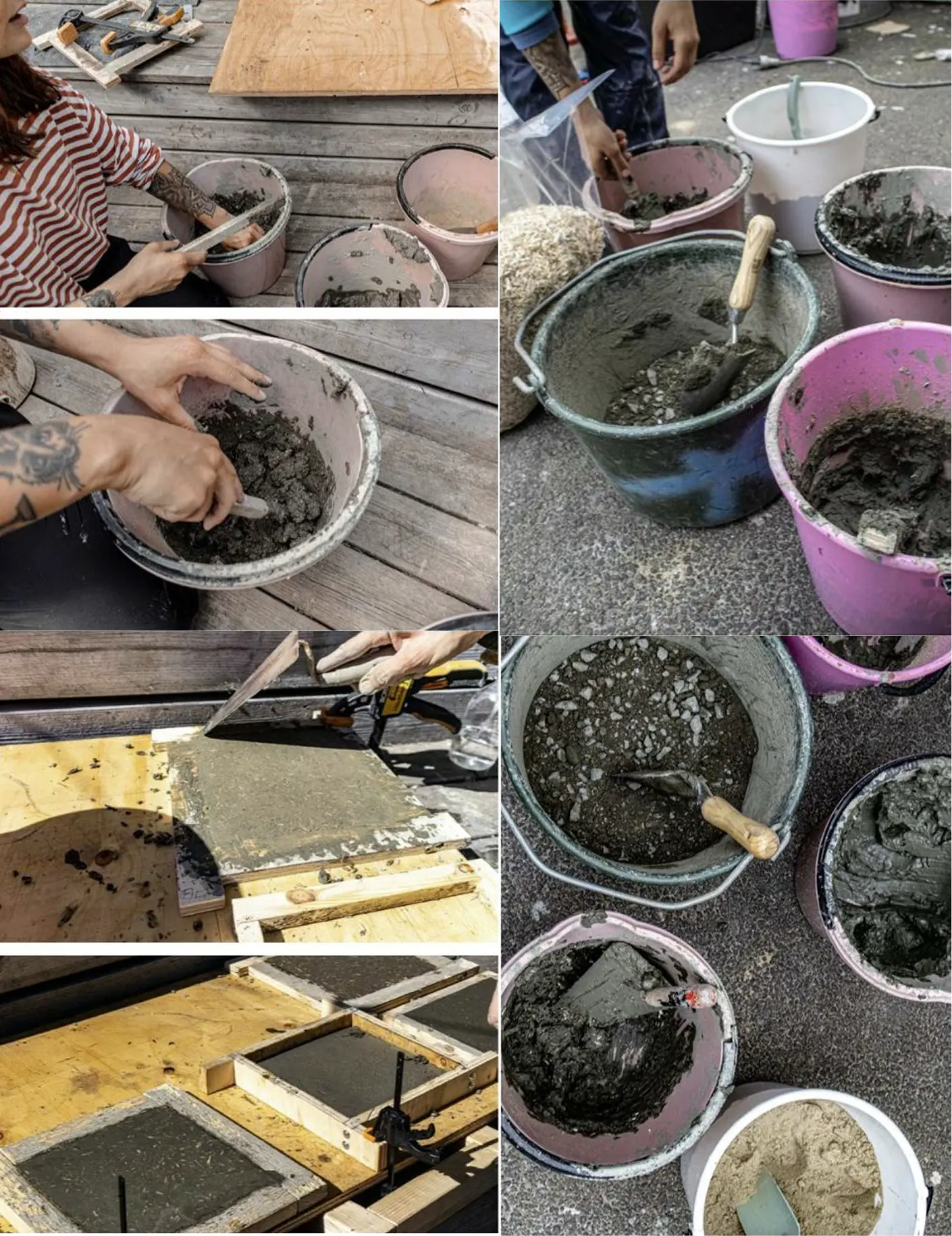
Prototype: Building the clay panels
Prototyping approach:
- Three hands-on prototype rounds were carried out.
- Panels were evaluated between sessions to refine mixtures and construction techniques.
- Multiple ratios of clay, sand, and hemp fiber were tested to find the most promising recipe.

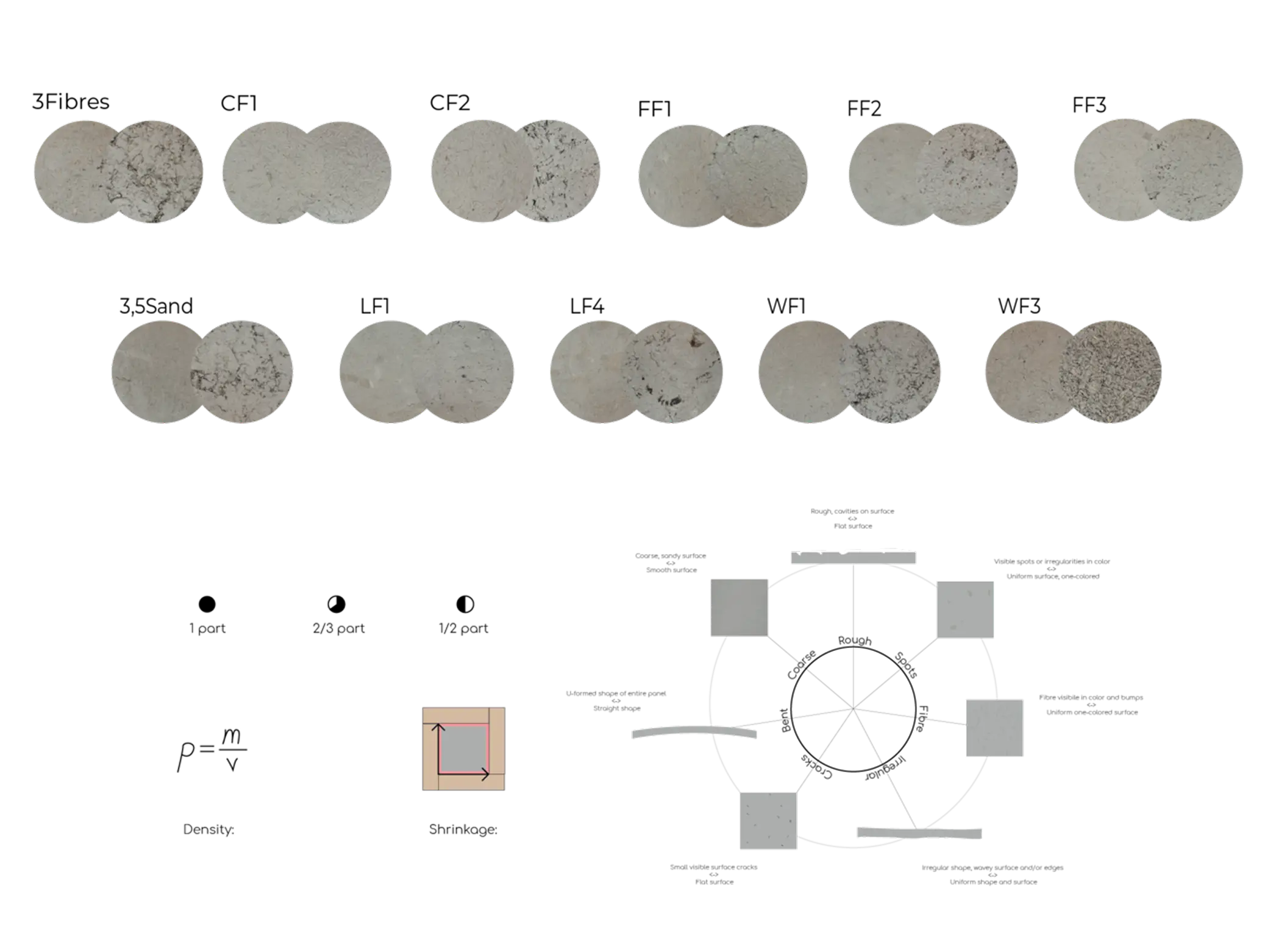
Prototype: Result and evaluation
Panel outcomes:
- 11 clay panels were produced using variations of clay, sand, and hemp fiber.
- Shrinkage and weight were analyzed with regard to environmental performance and building-industry requirements.
- Surface roughness and cavity formation were examined to understand their impact on sound absorption and aesthetic qualities.
The testing showed that even a minimal palette of natural materials can produce diverse textures, densities, and expressions. From these findings, we refined a final material blend and used it to build a full-size prototype panel.
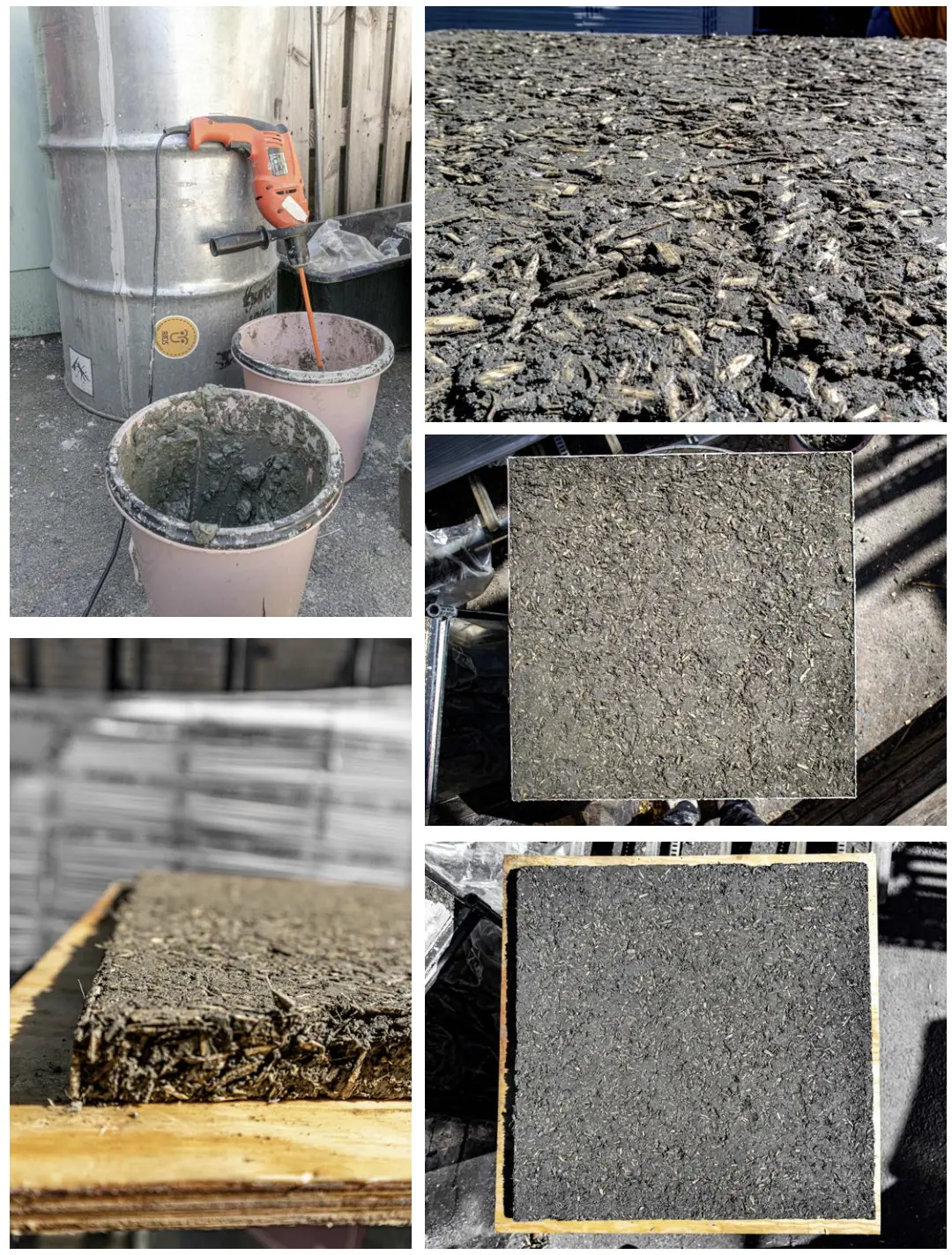
Further development: Sustainable installation
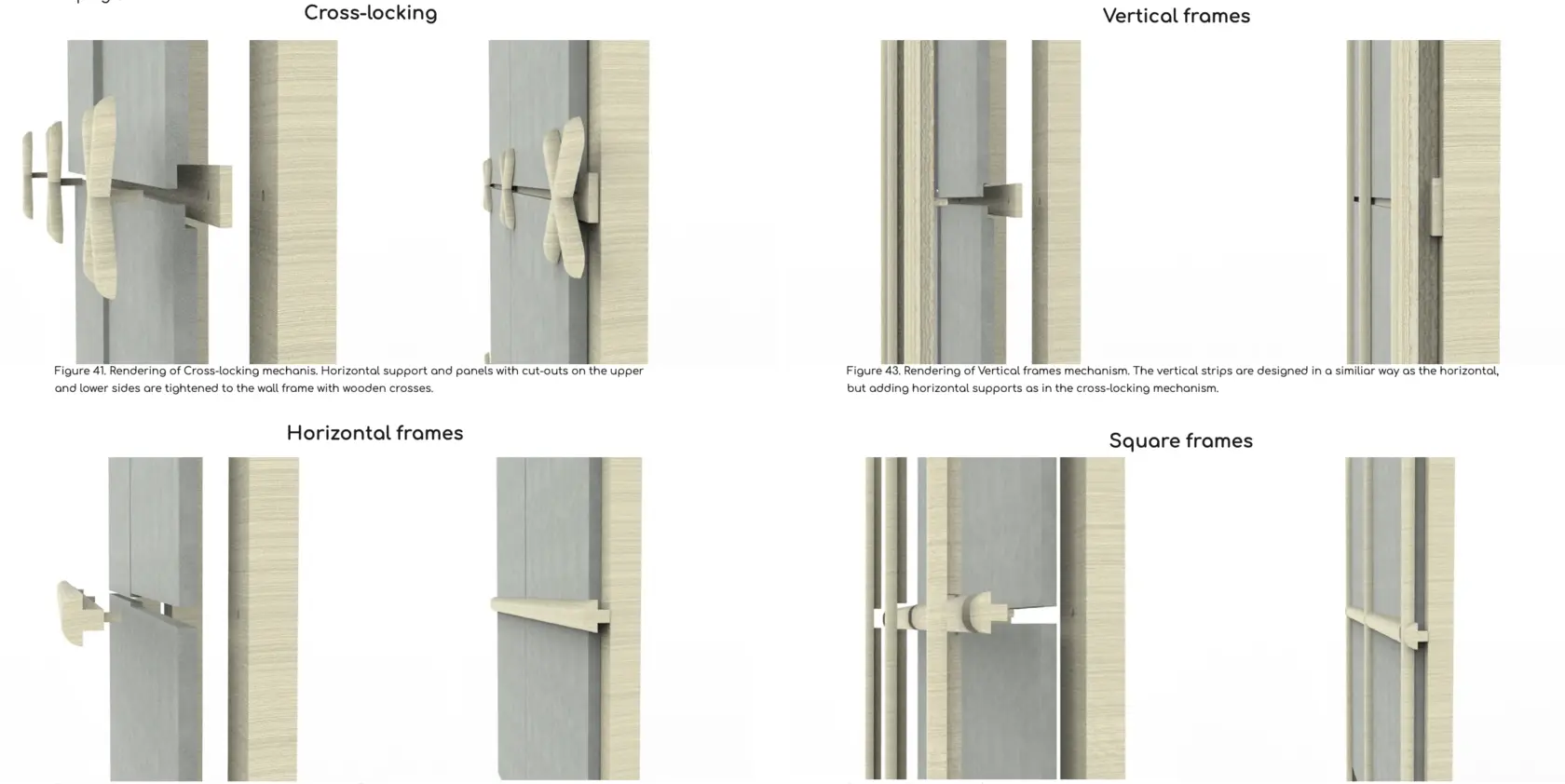
To complete the concept, we explored how the panels could be installed in a way that is both sustainable and practical for builders. A brainstorming session generated several design directions, which were then developed into CAD models showing full wall assemblies and installation methods.
These concepts aimed to reduce material waste, simplify construction, and support a more sustainable building process overall.
Further development: Sustainable installation
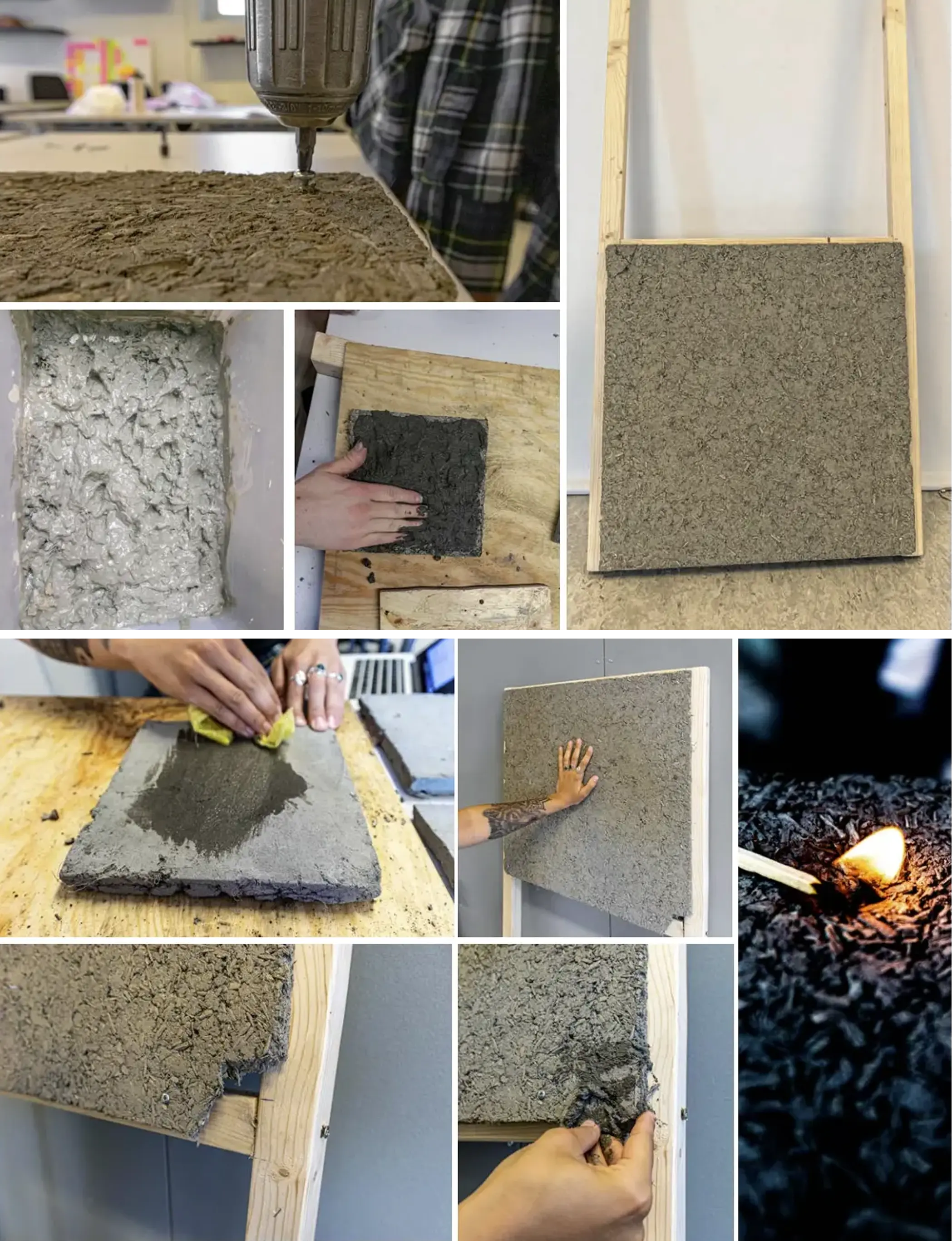
To validate the concept, we conducted a series of durability tests based on the requirement specifications and stakeholder demands. Over a two-day period, all prototypes were evaluated through practical, construction-oriented tests, including drilling holes, mounting panels with screws onto a wall frame, and applying them with clay plaster onto OSB.
The panels were assessed for strength, as well as their ability to be cleaned, repaired, and recycled. The purpose of this testing phase was to ensure that the prototypes could perform reliably and meet the expectations of the final concept.
The results showed that the final clay panel successfully met all required durability criteria identified during the research phase.
The Final Solution
The final concept demonstrates how locally sourced clay can meaningfully reduce the environmental impact of interior construction. The solution supports global climate goals, contributing to the ambition of reducing carbon emissions by 50% by 2050.
The clay panels provide several sustainability advantages:
•Fully biodegradable
• Can be endlessly recycled or reformed
• They use only natural materials — locally excavated clay, sand, and hemp fibers
• They require no burning or high-energy processing, resulting in extremely low production energy use
LCA outcome
The Life Cycle Assessment (LCA) shows a 62% reduction in CO₂e/m² compared to commercially used materials — highlighting the significant environmental benefit of this approach.
Health benefits
Clay panels support a healthier indoor environment in several ways. Their ability to absorb and release humidity helps regulate the indoor climate naturally, while also reducing pollutants in the air and improving overall air quality. Because the panels are made from natural materials, they emit no harmful toxins during production or use.
The inclusion of hemp fiber offers an additional benefit: it can bind CO₂, contributing to lower overall emissions throughout the panel’s life cycle.
The surface textures of the panels also open up possibilities for acoustic performance, where different patterns can provide sound-absorbing or sound-enhancing properties depending on the needs of the space.
Aesthetics
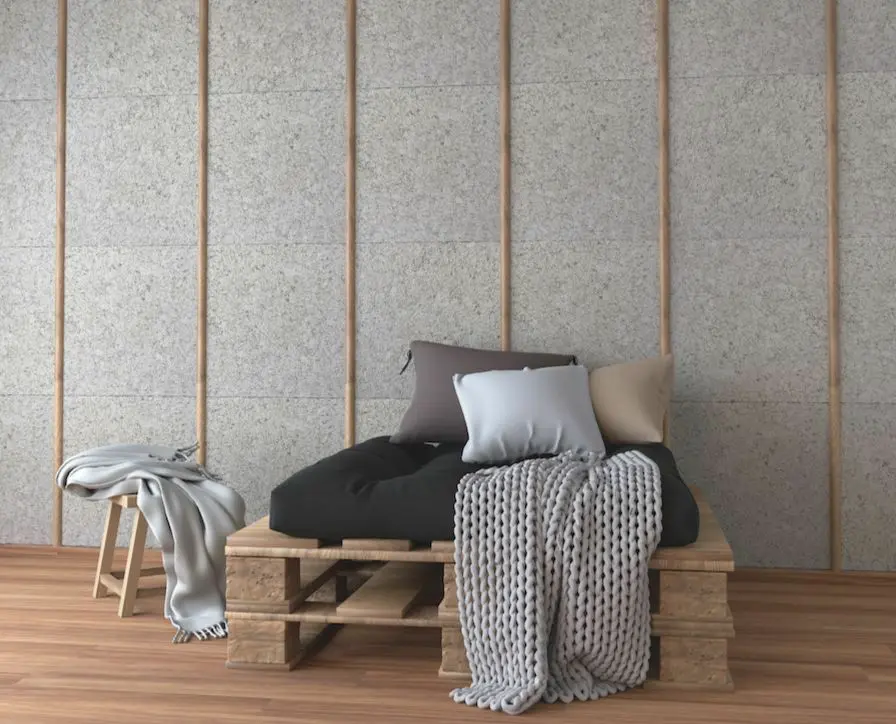
The clay panels offer a wide range of visual expressions, made possible by adjusting their shape, surface roughness, and color. Even though they are made from just three natural materials — clay, sand, and hemp fibers — the panels can be adapted for many different applications and interior needs.
Their timeless, neutral aesthetic allows them to blend seamlessly into various interior design styles, making them a versatile option for both contemporary and traditional spaces.
Recommendations for further development
Further testing with standardised building materials and alternative clay mixtures is recommended to optimize performance and reduce environmental impact. Exploring new panel shapes, such as circular, triangular, or hexagonal forms, could introduce depth and enhance acoustic qualities.
On-site fabrication may also be worth investigating, as it could lower transportation impact, though it may require adjustments to the production process. Expanding the project with different clay types and collaborating with industry stakeholders would offer valuable insights and enable practical evaluation of installation methods.
Conclusions: Clay could be the future
This project demonstrates that excavated clay can be transformed into a sustainable, high-quality building material. Through research, workshops, prototyping, and testing, we developed a concept that meets industry requirements while offering aesthetic versatility and strong environmental benefits.
By applying circular design principles and focusing on local, low-energy materials, the final solution proves that clay panels can significantly reduce environmental impact and support more sustainable construction practices. This work brings us one step closer to redefining clay as a valuable resource — and hopefully inspires others to see its potential rather than treating it as waste.
Final Reflections
This project was a true team effort and an eye-opening experience for me. I had never fully realised how much waste the building industry generates, or how much potential lies in using locally sourced materials like excavated clay. Seeing how this “waste” could become a sustainable building element was incredibly inspiring.
I gained valuable insight into sustainable and circular design principles, especially through tools like the Ecodesign strategy wheel, which helped us explore ways to reduce environmental impact throughout the product’s life cycle. This process showed me how intentional material choices and low-energy production methods can meaningfully influence the sustainability of a final design.
Overall, this project deepened my understanding of sustainable design and strengthened my commitment to integrating these practices into future work.