Encouraging Sustainable Thermal Behaviors
Chalmers University of Technology wants to research how to create a positive thermal experience - in the hope of reducing energy use for heating households.
This project focuses on researching the human senses in order to design a positive thermal experience, analyzing the results, and designing a final concept.
Create a positive thermal experience
Design a solution that enables and encourages less energy use without creating negative thermal experiences. The way to achieve positive thermal experiences should enable people to avoid thermal discomfort rapidly and to heat the whole body through an emotionally satisfying experience.
The problem: We are using too much energy!
Energy use is notoriously hard to reduce, even in highly industrialized countries. In Sweden alone, around 140 TWh is spent on heating homes each year. To move toward a more sustainable energy system, we need people to use energy more efficiently, but that is easier said than done.
Energy is abstract and difficult to understand, while the sensations tied to it, like warm showers or heated rooms, are immediate, emotional, and deeply enjoyable. This tension makes sustainable thermal behavior hard to change.
Limitations:
- Focus on thermal experiences connected to energy use in households
- Focus on designing an experience - NOT on designing the artefact itself
- Consider the Swedish climate
The final result
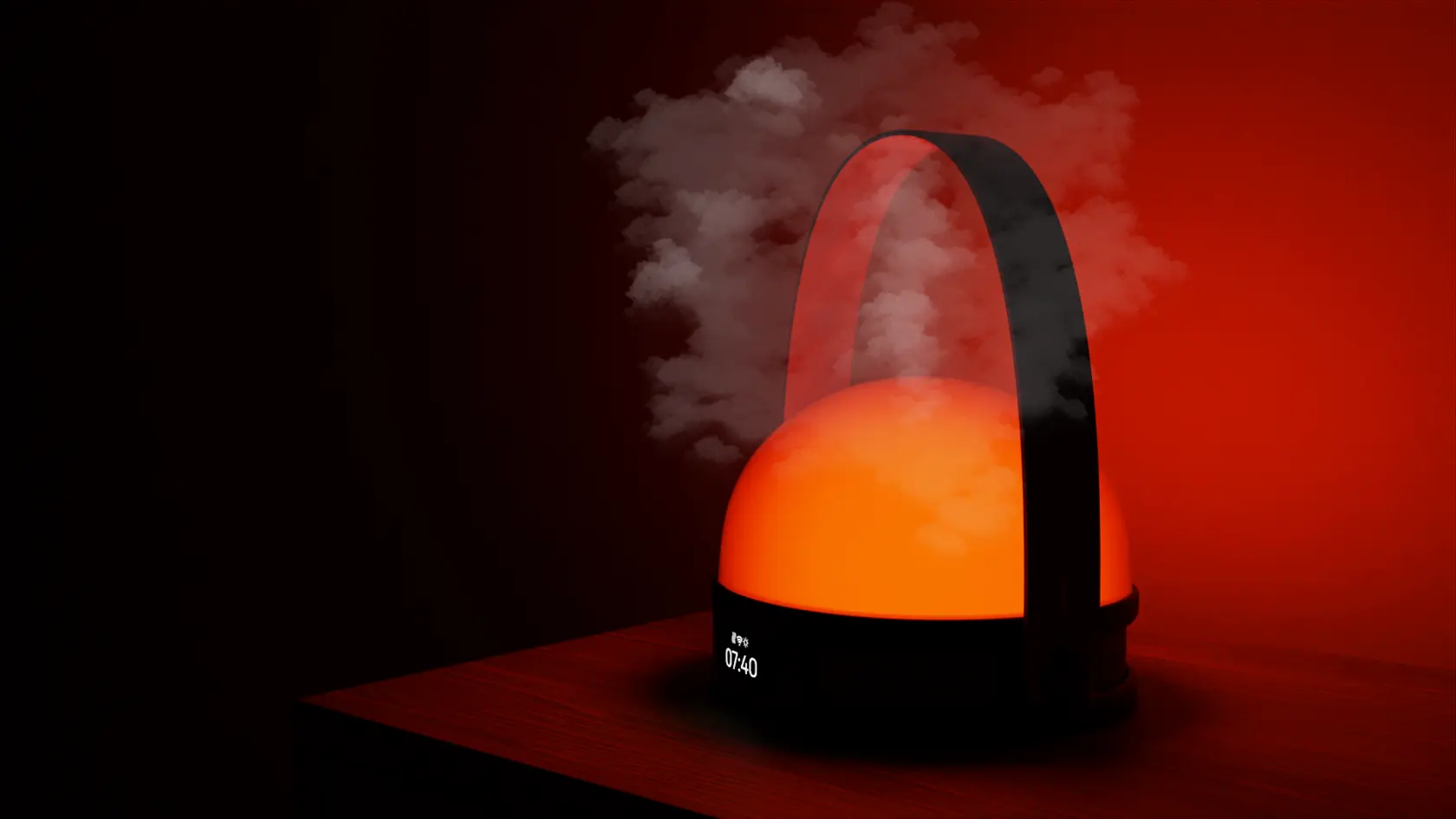
We designed a connected sensory hub and companion app that makes sustainable thermal habits feel easier, more positive, and more enjoyable. By combining gentle light, sound, and scent with personalised guidance, the system supports users in creating comforting morning routines without relying on excess heating.
The solution included:
- A portable sensory hub built around the three most impactful senses identified in research: smell, sight, and sound.
- A design process focused on pleasurable user experiences and best practices in sensory interaction.
- A companion app concept that allows users to personalize their thermal routine and receive subtle nudges toward more sustainable behaviours.
The overall approach
Our process followed three phases: Understanding & Researching UX behaviors, Analyzing insights, and Designing & Evaluating the experience. We focused on how sensory cues can shape a more positive thermal experience, exploring users’ routines and how sight, sound, and smell influence comfort and sustainable behavior.
Design theory:
We applied Jordan’s Four Pleasures—socio, ideo, physio, and psycho—to focus the project on how sensory experiences can support sustainable thermal habits. This framework helped us identify which interactions feel comforting and motivating, guiding both our research and how we evaluated the final concept.
Methods:
We used a mix of surveys, interviews, and user tests to understand thermal habits, explore sensory preferences, and validate how well the concept supported more sustainable routines.
Understanding the UX
1) Data collection ➤ 2) Analysis of data ➤ 3) Results
How the data was collected
As a starting point, we didn’t have a clear problem or target group, so we began by gathering data. The following methods were used to answer the question:
What is the core issue, and who is the primary audience?
1. Online Survey
Our first step was an online survey to understand how people experience thermal discomfort in their daily lives and to get a broad overview of habits and challenges.
- 93 respondents
- Ages 18–80
- Provided general insights about daily thermal experiences
2. In-Person Interviews
Next, we conducted in-person interviews divided into two focus areas:
- Understanding users and their routines
- Exploring how the five senses relate to temperature and comfort
- 12 participants
- Ages 23–60
- Provided deeper insights into sensory preferences and emotional responses
How We Collected Sensory Insights

1. Imaginary exercise
Participants closed their eyes and imagined hot, cold, and pleasant temperatures, describing the emotions, memories, and sensory cues they associated with each.
Gave us: A clearer understanding of how temperature links to the five senses and emotional comfort.
.png)
2. Evaluation of rooms
Participants ranked images of different rooms from warmest to coldest, based on interior style, materials, and atmosphere.
Gave us: Insights into how visual cues and spatial qualities influence perceived thermal comfort.
.png)
3. Evaluation of existing solutions
Participants reviewed how they currently use thermal products like blankets, candles, heaters, and clothing, and why they rely on them.
Gave us: An understanding of existing behaviors, pain points, and opportunities for more sustainable solutions.
Analysis of Data and Results
After collecting the data through user studies, we analysed it in order to identify possible problem areas where we can implement a solution that can provide a better thermal experience. This was done by summarising data and looking for connections and patterns.
It is not the temperature itself that defines thermal comfort, it's rather the perceptions of temperature that defines thermal comfort.
Result and Key Findings from the Survey
93 responses
- Thermal comfort is driven more by perception than actual temperature.
- People are generally comfortable being slightly warm, but not comfortable being slightly cold.
- Cold discomfort is most common in the mornings and evenings, when people are inactive.
- 72% of respondents consider themselves environmentally conscious, yet
- Most regulate temperature based on instant pleasure, not sustainability.
What we took with us
People respond more to the feeling of warmth than to the actual temperature, especially during inactive moments like mornings and evenings. If we can positively influence this perception through sensory cues, we can help users feel comfortable without relying on higher energy use.
Result and Key Findings from the Interviews
12 Participants
From the interviews, we saw that:
- Context-dependent
The experience of temperature is highly context-dependent; a given temperature can be experienced as either hot or cold depending on the situation.
- Mismatched mental models Control
Being able to control the temperature of the body is very important for being calm and relaxed.
- Too much text: Distractions as a tool
Some mention distraction as a tool to avoid or reduce thermal discomfort.
- Looking for short-term fixes
People look for short-term fixes in order to regulate their temperatures; opening the windows is an example of this.
The 5 Senses: How People Experience Warmth and Cold
To design a positive thermal experience through the senses, we needed to understand what people naturally associate with warm and cold temperatures. The interviews revealed clear patterns across sight, sound, smell, taste, and touch.
- Sight: Warmth is linked to fire, saunas, sunlight, and red/orange tones.
- Smell & Taste: Participants described cold as scentless, while warm and pleasant temperatures were tied to rich smells and flavors.
- Nature Associations: Pleasant warmth reminded people of summer, the ocean, and being outdoors.
- Sound: Cold was associated with sharper, higher-pitched sounds, while warm and hot experiences felt quieter and softer.
These insights helped us identify which sensory cues could be used to enhance the perception of warmth without relying on more energy.
Connecting User Insights to Jordan’s Four Pleasures
By linking our user findings to Jordan’s Four Pleasures, we were able to narrow the focus of the project.
- Physio and Psycho Pleasures ( Our Focus )
Users want to feel in control of their temperature and respond mainly to perceived warmth, not actual temperature.
- Socio and Ideo Pleasures ( played a smaller role )
While participants cared about sustainability and social norms in theory, thermal comfort overrode ideals in most decisions.
Overall, users are aware of their environmental impact, but rarely willing to compromise or experiment with their comfort. This insight guided us toward designing solutions that enhance the feeling of warmth rather than asking users to change their behaviors directly.
Designing the UX
1) Identify Target Group ➤ 2) Specify UX goal ➤ 3) Ideate and Testing
People that have an unpleasant thermal experience in the morning
Our research pointed us toward a specific group: people who struggle with an unpleasant thermal experience in the morning. Survey and interview data showed that many users feel too cold when getting out of bed, making it harder to start the day.
They care about their home environment, are aware of their environmental impact, and don’t want extreme solutions like wearing bulky layers indoors.
The core issue became clear:
The discomfort comes from the thermal contrast between the warmth under the sheets and the cold room they step into.

Morning Scenario
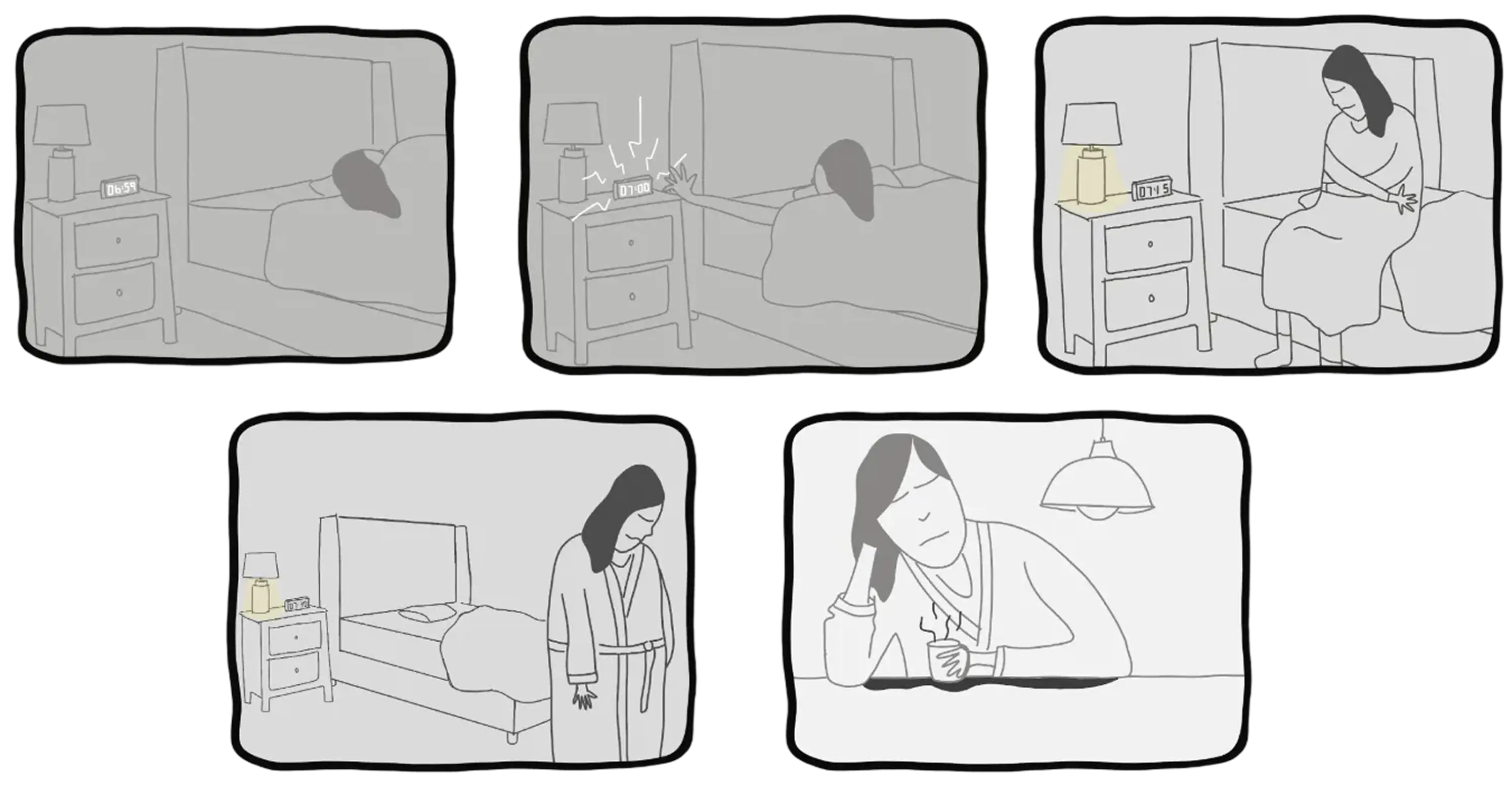
To illustrate the problem in context, we created a simple scenario featuring Robin, a representative of our target group.
- Robin wakes up in a dark, chilly bedroom.
- The alarm goes off, and she reaches out from under the warm sheets to turn it off.
- Feeling tired and slightly cold, she sits on the edge of the bed trying to wake up.
- She puts on a robe and slowly makes her way to the kitchen.
- Robin makes a cup of coffee to warm up and lift her mood for the day ahead.
Perhaps this isn’t too far from your own morning routine…?
To create a pleasurable thermal experience in the morning when leaving the bed
With that scenario in mind, we defined our UX goal: to create a more positive and supportive thermal experience in the morning. To guide the design, we framed this goal with a set of sub-goals:
- Control
People want to be in control of their thermal comfort.
- Easy access
Instant response wanted. If you are cold, you want to get heated instantly.
- Sensory balance
Congruence - Match sensory experience with context. All senses will be stimulated by something that is associated with heat and comfort.
- Attention
Redirect the attention away from the actual temperature. Let the perceived temperature improve the experience by creating a distraction.
- Contrast
Reduce the contrast between the comfort under the sheet and the rest of the bedroom.
How might we?
After identifying the target group, problem area, and our UX goal, we started ideating on potential solutions. We ideated both on how to get warm, and how to create a behaviour that would lead to using less energy overall.
How might we design a pleasant thermal experience in the cold morning without turning up the heat?
.png)
Further develop & iterate - 4 concept
After we further developed some of the ideas, we decided to continue with four potential concepts, based on the information we got from the user studies.

Clothing Deliver
A hanger that delivers your clothes to the bed so you can dress without leaving the bed.

Hot glasses
Glasses that provided a warming light.
Scrub yourself
Start the day by scrubbing yourself to get the heat going through your body.

Bright wakeup
A product that gives a pleasant light, sound and smell for you to wake up to in the morning.
Evaluation - One Final concept
After this, we ran a PNI evaluation to weigh the pros and cons of our concepts and ultimately selected Concept 4 – Bright Wake-Up for further development.
A concept defined as: “An alarm clock that creates a pleasant wake-up experience through warm light, inviting scents, and soft sounds — giving you the ultimate warm morning experience.”
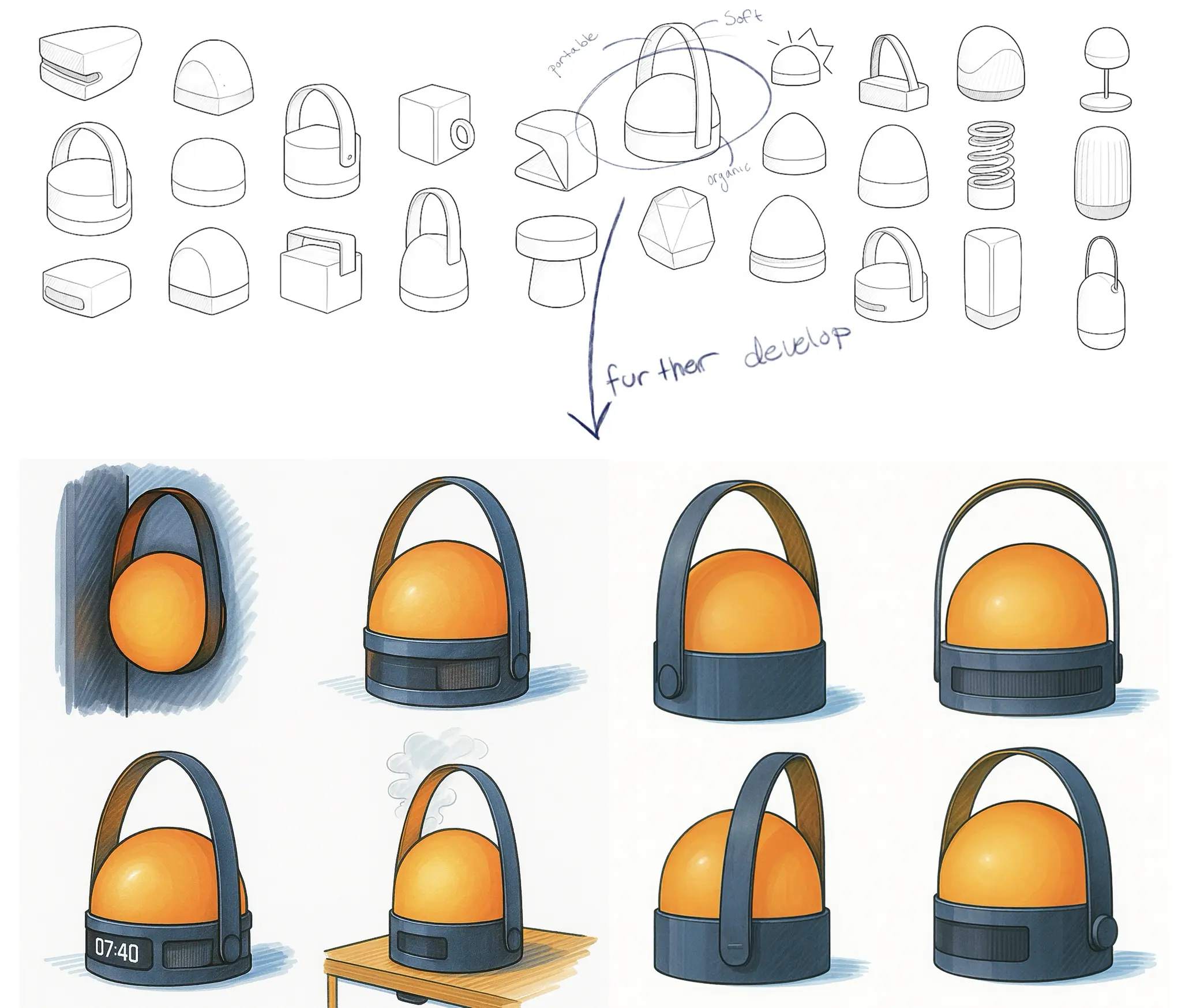
We then moved into sketching and experience design. As mentioned earlier, our focus was on designing the experience, not just an artefact. One of our sub-goals was to give users a sense of control, so we paired the product with a companion app that allows them to adjust settings and personalize their morning routine.
Main Functions
From the user studies, we learned that smell, sound, and light are the strongest sensory cues associated with warmth. These became the core functions of the product. The artefact needed to be:
- Portable
- Simple to control
- Equipped with a speaker
- Able to diffuse scent
- Designed with warm, adjustable light
- Fully controlled through an app
Together, these elements created a holistic sensory experience aimed at shaping a warmer, more comfortable, and more sustainable morning routine.
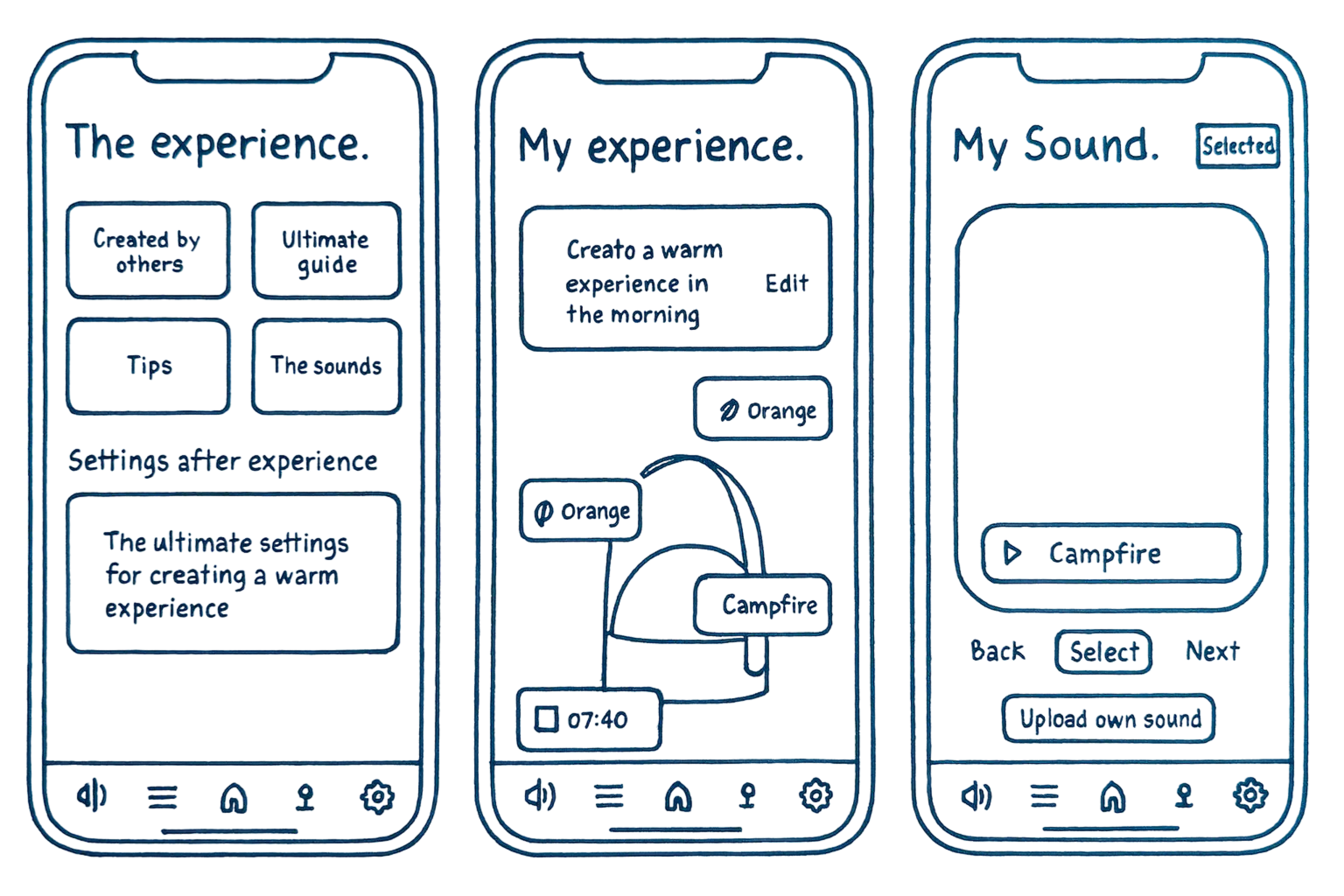
Low firelity wireframes of UI Design
We also created low-fidelity sketches of the app’s UI to explore how the experience could be structured. Features like the alarm, smell, light, and personalisation.
As mentioned earlier, the focus of this project is not the artefact or detailed UI design, but the experience, the user research, and how to design for sustainable behaviors. These wireframes were created only to illustrate the idea and will not be further analyzed or iterated on.
Testing: Formative study of the senses in the morning
With the hub concept and app mockup defined, we conducted a sensory evaluation to further develop the experience. The goal was to understand what people associate with warm and pleasurable temperatures, specifically in the morning.
We tested different sounds, lights, and smells that participants had mentioned during the initial interviews.
Method
- 8 participants were asked to lie down and relax in bed to recreate a realistic morning mood.
- They evaluated a range of sounds, light colors, and scents.
- Each participant placed their preferences on a character spacing chart to express how warm, pleasant, or fitting each sensory cue felt.
Result
From the morning-context evaluation, we identified the most comforting and “warm” sensory defaults for the product:
- Sound: Fireplace
- Sight (Light): Smooth orange/red
- Smell: Coffee
These insights helped shape the core sensory profile of the final experience.
The Final Solution
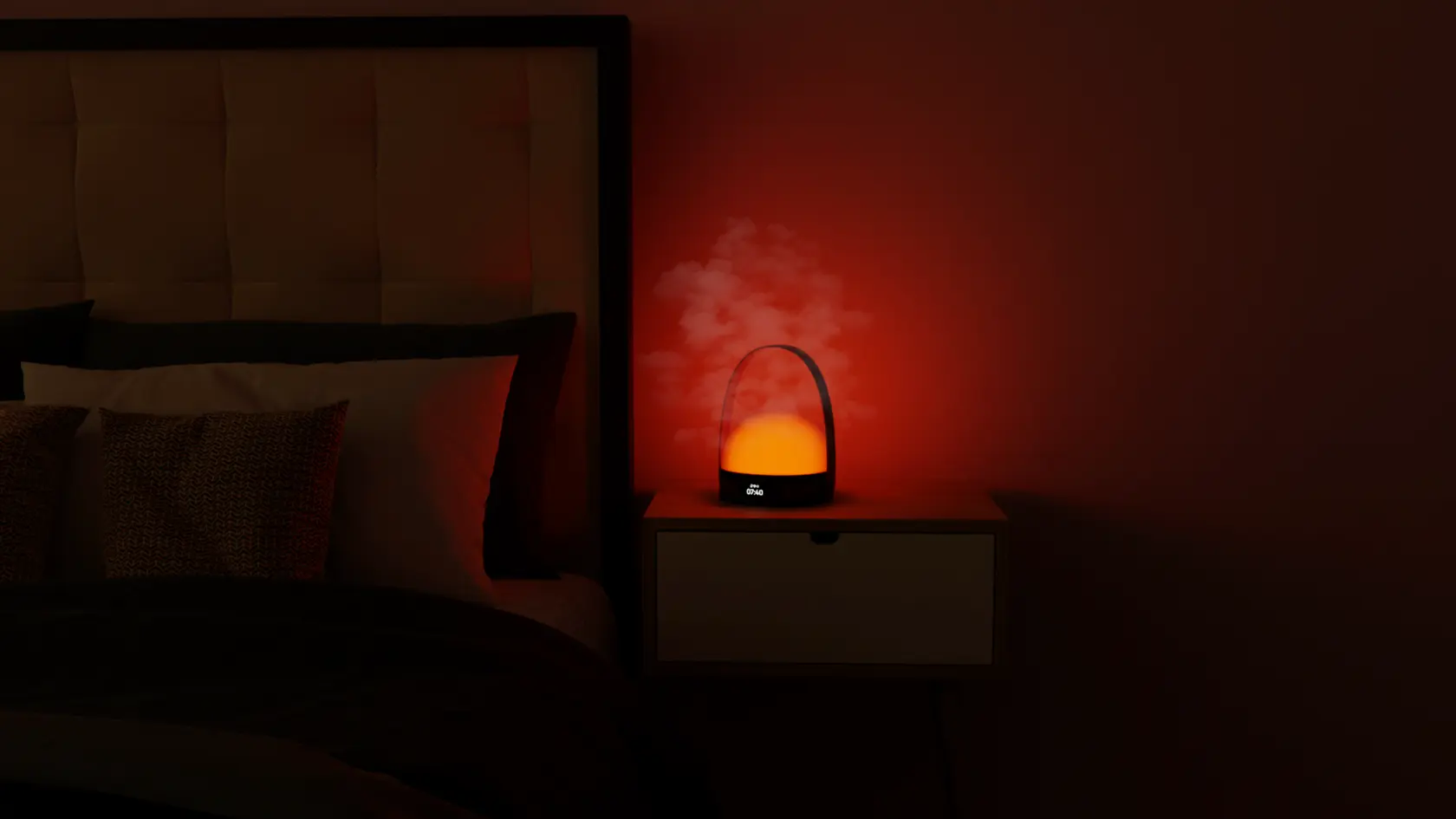
The final concept consists of a portable sensory hub paired with a companion app. After analyzing the research, we created a 3D render of the hub and a functional app prototype to illustrate how the system would work together and to prepare for the final user evaluation.
Using the senses to create a congruent warm experience
The sensory hub is designed to create a pleasant morning experience of warmth by stimulating multiple senses at once. Instead of raising the actual temperature, the product works by increasing the perceived temperature—redirecting attention away from negative cold sensations and toward a congruent, layered experience of simulated heat through light, sound, and scent.
Based on our final sensory testing, the hub uses the following default settings for a warm morning experience:
- Light: a smooth warm orange glow
- Smell: coffee scent released through a steam-like diffuser
- Sound: a soft, cosy log-fire ambience
Together, the portable hub and the app create a holistic experience that supports a warmer, more comfortable, and more sustainable morning routine.
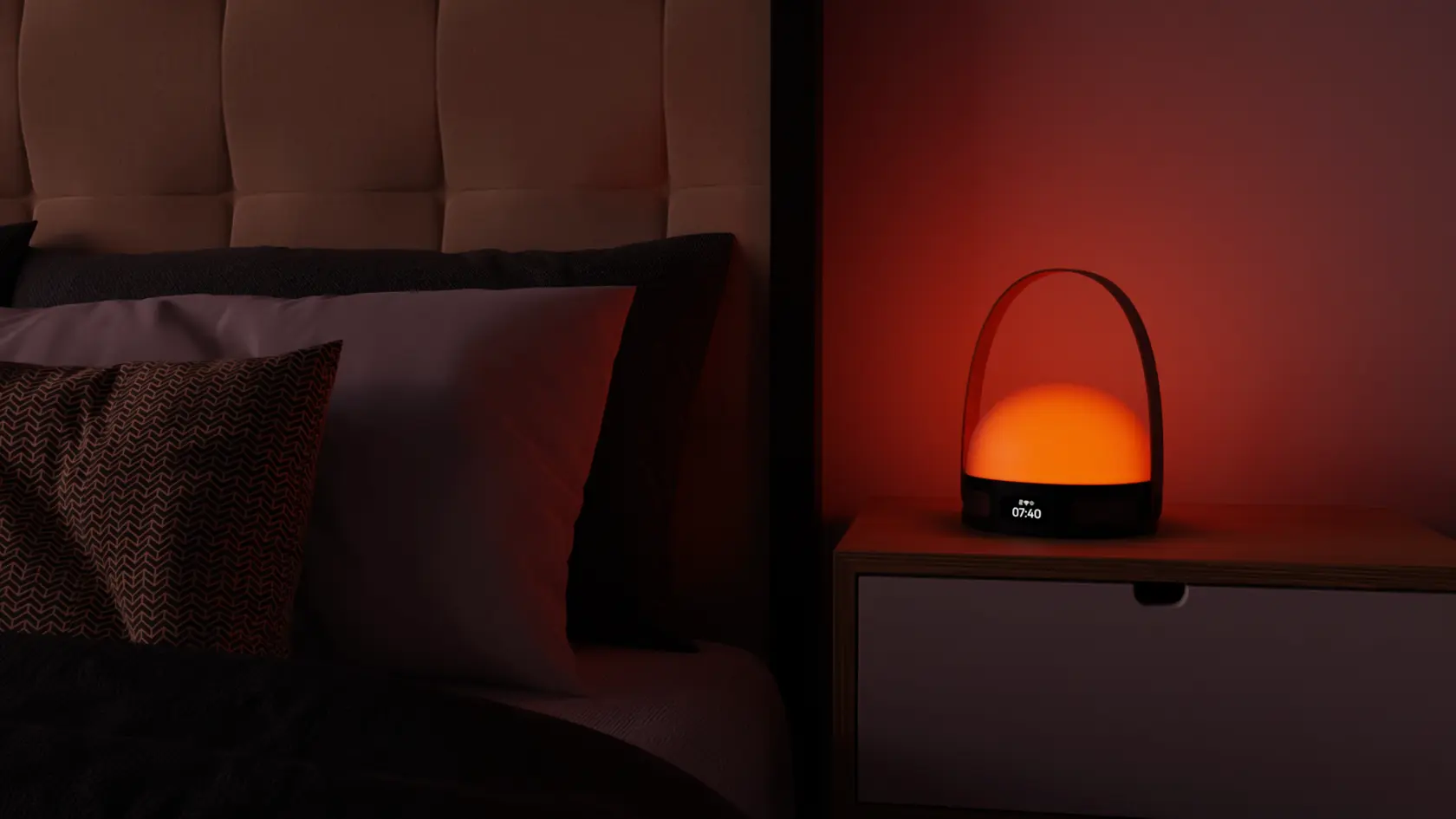

Designed for sustainable behaviour:
The sensory hub is designed to support more sustainable morning routines. Because it’s portable, users can carry it with them, reducing the need to turn on multiple lights or rely on several devices. It can replace everyday products like lamps, humidifiers, and alarm clocks, meaning the energy it uses is balanced by the reduced need for other products.
This design direction connects back to our user research and Jordan’s Four Pleasures. Users expressed that warmth is strongly tied to physio and psycho pleasures—feeling comfortable, in control, and emotionally supported. By acting like a modern lantern, the hub brings back warm, personal memories through light, scent, and sound. Waking up to these cues not only creates a pleasant perception of warmth, but also sets a positive tone for the entire day, encouraging behaviours that feel good and use less energy.
.webp)
.webp)
The application
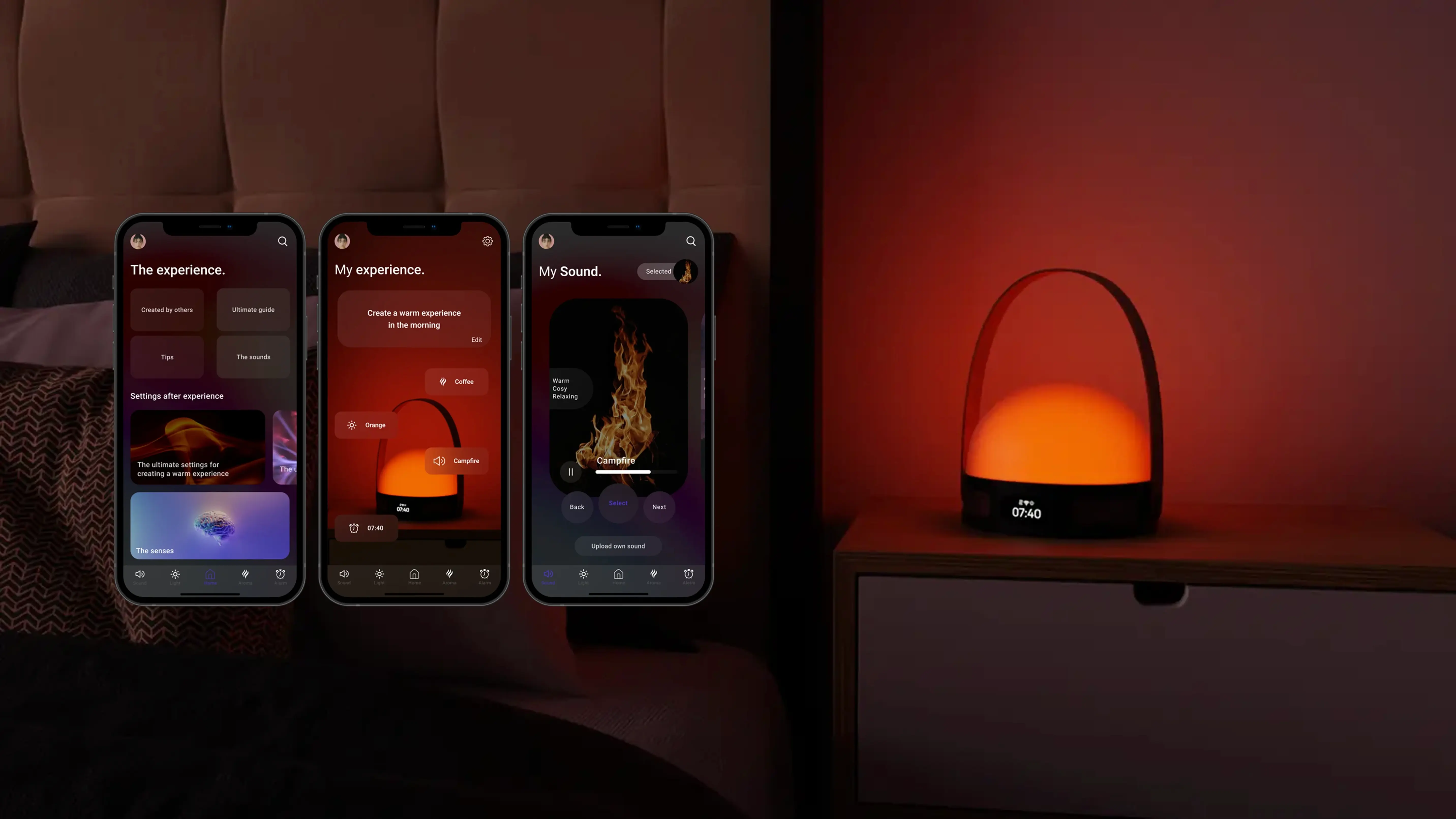
This is a small prototype showing some of the app’s core features and giving an idea of how the user interface could look.
Homepage:
The home screen gives the user tips, information, and quick access to their settings, supporting their need for control and a smoother morning routine.
These choices are directly informed by our user research and Jordan’s Four Pleasures, helping users stay aware of their goals while making the experience feel comforting, motivating, and easy to manage. From here, they can navigate to their profile, where they get an overview of their goals, progress, and current sensory preferences.
Sound settings:
On the sound page, the user can swipe through a range of sound cards to explore different options. Tapping a card gives them more information about how that sound influences their thermal experience, reflecting our research findings that sound plays a key role in shaping the perception of warmth.
For deeper personalisation, users can also upload their own sound, supporting the need for control and comfort, which emerged as strong motivators in our user studies.
Light Settings:
In the light settings, users can choose a color, pick colors from images, or select a scene to shape their morning atmosphere. They can also upload their own image, allowing the hub to generate warm color gradients automatically.
This reflects our study findings that warm light, especially orange and red tones, strongly enhances the perception of warmth. By giving users flexible control over light, the design supports both personal comfort and the sensory cues that help create a more pleasant, energy-efficient morning experience.
Summative study: Evaluating the final solution
To evaluate the final solution we first did an experience simulation and interview with a focus on Physio and Psycho pleasures. Second, we did Surveys focusing on Ideo and Socio pleasures.
1. Experience simulation and interview - Emotional responses
How:
This was done by waking up 5 participants in the morning with the simulated sound of a campfire, the smell of coffee and orange/red light. Followed by an interview that focused on the participant's emotional reactions to the product experience.
Summary of Result:
In a morning context, we are quite emotionally contained yet sensitive, therefore surprises must be well-designed. The experience got high values on Joy, Satisfaction, and Pleasure which we believe are more important than Amazement when creating a long-lasting relationship with this type of product. This was a good thing since our goal is to create attachments and implement new habits for the user.
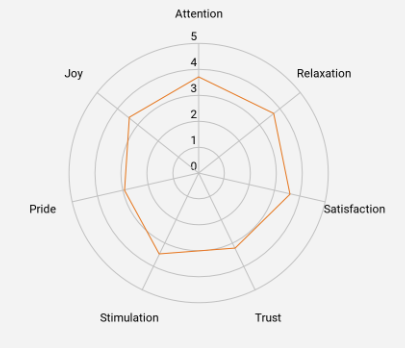
2. Survey - Can you identify yourself with this type of product?
How:
We also conducted a survey with 50 responses; the focus was to further evaluate Ideo and Socio pleasures.
- The participant got to read an illustrated scenario to get to know the product and to get a sense of the experience it provides.
- The questions evaluate owning and using the product, and if they could identify themselves with this type of product
Summary of Result:
Overall, the product gave high value to the presenter's emotions, indicating that people feel that the product is desirable. People also expressed that the product would improve their morning experience, and that it was highly associated with heat. The portability of the product was appreciated and was seen as an important part of making it possible to create a good morning routine.
Recommendations - for further development
Do more testing: The product’s features have only been tested on a small sample size, so more user tests would be beneficial to understand how well the product would actually work.
Detail development: Since the focus was to design for the senses, the next step would be to further develop the concept, both the physical sensory hub and the application.
Sustainable testing: It would be interesting to see what the long-term usage of the product would look like and conduct tests to see if the solution is as sustainable as we hope it can be.
Conclusions - Focus on the senses!
With the use of our summative studies, we have seen that the sensory hub has a lot of potentials to work since it has been received so well. The way of using different senses seems to work well in theory to influence a person’s perception of heat. So in conclusion, we have succeeded to create a comfortable thermal experience by designing for the senses which have the potential to be a more sustainable alternative.
Final Reflections
This project was really fun to work on! I learned so much about the human senses, psychology, behavioural design, and how one can use the design process to really focus on the experience itself. However, it was challenging not to focus on the visual design of the concept, even though I'm still happy with the result we got. I think that this type of project reminded me of the endless possibilities there are to solve a problem and always have an open mind.
Finally, I really appreciated working on this team, it was a real dream team where all crazy ideas were appreciated and it really taught me how important it is to be open and not scared of failing. It was thanks to this openness we had in this team that allowed us to develop such a unique solution and experience.